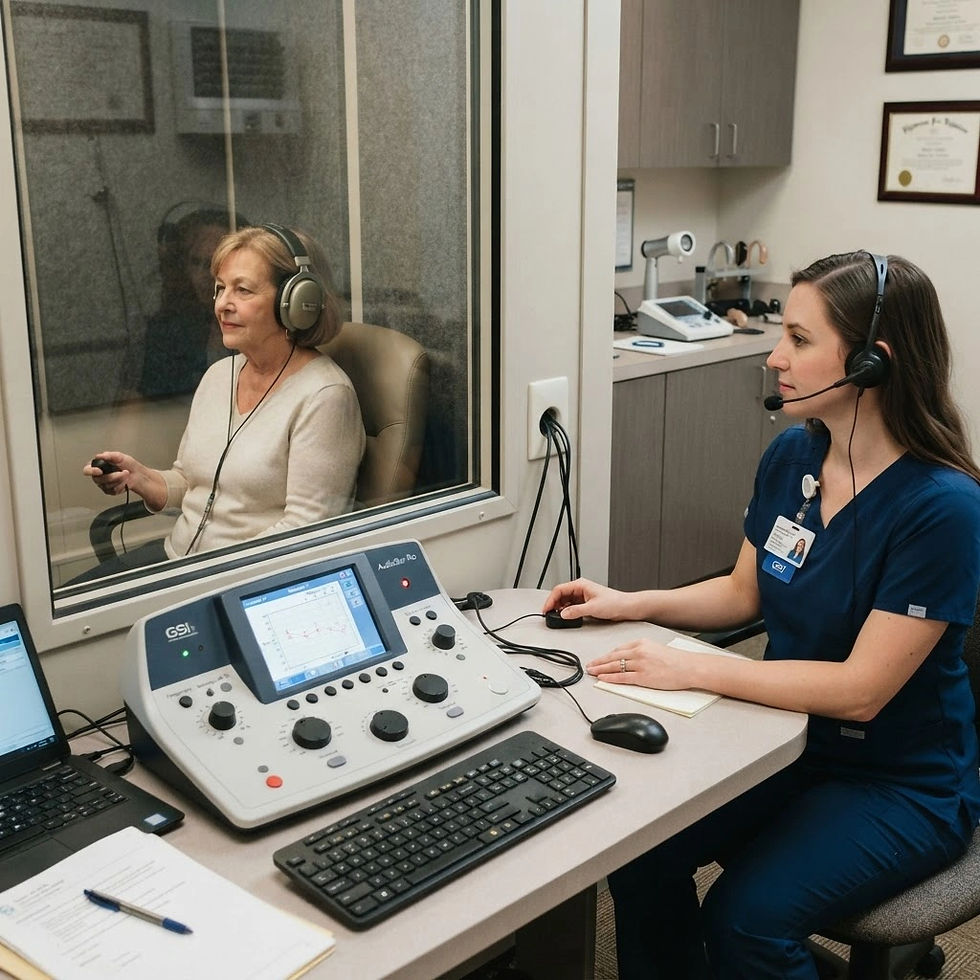
Auditory Training for Auditory Processing Disorder: Buffalo Model, Apps, and Classroom Tips.
A child can pass a hearing test and still miss half the message in a noisy classroom. That is one of the hard parts of Auditory Processing Disorder, or APD. The ears may detect sound, but the brain struggles to sort, sequence, remember, and make meaning from what it hears.
Auditory training gives the brain structured practice. Over time, it can improve listening skills, attention to sound, and comprehension. The best results usually come when home, school, and clinical support work together.
This article is informational only and does not replace advice from an audiologist, speech-language therapist, educational psychologist, occupational therapist, or medical professional.

Why auditory training matters for APD
APD can show up in many ways. A learner may often ask “what?”, mishear similar words, struggle with multi-step instructions, lose track during class discussions, or look inattentive when they are actually working very hard to listen.
Standard classrooms often expect children to learn mainly by listening. For a child who has APD, that can feel like expecting a fish to climb a tree. The fish is not lazy or unwilling. It is built for water. Similarly, a child with APD may be capable, curious, and bright, but the learning space may demand skills that are weak or underdeveloped.
Auditory training changes the task from “just listen harder” to “let’s build the listening skill step by step.”
It can support:
Better awareness of speech sounds
Improved listening in background noise
Stronger auditory memory
Better sequencing of sounds and words
Improved understanding of spoken instructions
More confidence in class and social settings
Progress is often gradual. Small gains matter, such as following a two-step instruction, catching the ending of a word, or understanding a lesson with fewer repeats.
Erber’s model explained in everyday language
Erber’s model is a useful way to understand listening development. It breaks listening into four levels: detection, discrimination, identification, and comprehension.
Think of it as a ladder.
Listening level | What it means | Everyday example |
Detection | Noticing that a sound is present | “I heard something.” |
Discrimination | Hearing that two sounds are different | “Cat and cap do not sound the same.” |
Identification | Knowing what the sound or word is | “That word was ‘pencil’.” |
Comprehension | Understanding the message | “I need to take out my pencil and write my name.” |
Children with APD can have a breakdown at any point on this ladder, especially when speech is fast, the room is noisy, or instructions contain too much information at once. Our in-depth assessment pinpoints exactly where the level of breakdown is so that we can structure auditory training around specific difficulties.
Auditory training works best when activities match the learner’s current level. If a child struggles to tell similar sounds apart, jumping straight to long spoken instructions can create frustration. The ladder helps therapists choose a fair starting point.

Buffalo model techniques that support listening
The Buffalo Model, developed in the field of central auditory processing, is often associated with identifying patterns of auditory weakness and selecting targeted intervention. Approaches linked to this model may include work on auditory decoding, tolerance for degraded speech, auditory memory, and organisation of auditory information.
A trained professional should guide diagnosis and treatment planning. At home and school, the principles can still be supported through safe, structured practice.
Common Buffalo-style auditory training areas include:
Phonemic awareness practice
Work on small sound differences in words. For example, listen for the difference between “ship” and “sip” or “coat” and “goat”. Start with clear speech and quiet surroundings.
Auditory closure tasks
The listener fills in missing parts of a word or sentence. For example, “Put the book on the ta…” The child says “table”. This helps when real-life speech is unclear or partly masked by noise.
Following directions in steps
Begin with one step, then build up. “Touch the red block.” Later, “Touch the red block, then put the blue block in the cup.”
Auditory memory games
Repeat numbers, words, or short sentences. Keep it playful. Try shopping-list games, rhythm copying, or “I went to the market and bought…”
Competing noise practice
Once basic skills are steady, practise listening with gentle background sound. This should be carefully graded. Too much noise too soon can overwhelm the learner.
The key is consistency. Ten focused minutes, several times a week, often works better than one long session that ends in fatigue.
Acoustic Pioneer apps and home practice
Acoustic Pioneer apps are used as part of auditory training programmes. App-based practice can be helpful because it is structured, repeatable, and easy to fit into a routine.
Apps should not become the whole plan. They work best when paired with structured auditory training with a qualified audiologist.
Tips for using listening apps well:
Choose a quiet time of day when the learner is not exhausted.
Use headphones only when advised or when it suits the task.
Sit nearby at first so the child does not feel stuck alone.
Keep sessions short and positive.
Track changes in real life, not only scores in the app. Your audiologist will access therapy progress for their portal.
Stop if the activity causes your child to experience stress, headaches, or shut down.
Useful resources may include auditory training apps, speech and language therapy materials, phonological awareness games, audiology recommendations, teacher-made listening tasks, and visual instruction cards.

Classroom enhancements that make school more accessible
A learner with APD should not have to rely on effort alone. Classroom changes can reduce the listening load so the child can use their thinking energy for learning.
Helpful enhancements include:
Better seating
Place the learner near the teacher, away from doors, fans, windows, and noisy groups.
Clear instructions
Give one instruction at a time. Use short sentences. Never single out the learner in the classroom as this increases anxiety.
Visual back-up
Write key words on the board. Use pictures, checklists, lesson outlines, and homework notes.
Good classroom acoustics
Soft furnishings, tennis balls on chair legs, closed doors, and reduced background noise can help. Some learners may benefit from remote microphone systems if recommended by an audiologist.
Processing time
Pause after questions. Avoid rushing answers. A child with APD may need extra seconds to decode the message.
Assessment adjustments
Where appropriate, allow written instructions, quiet spaces, repeated directions, or extra time.
These changes do not lower expectations. They remove barriers. A fish may not climb a tree, but in water it can move with skill, speed, and confidence.
The team around the learner matters
APD support is strongest when it is multidisciplinary. Each person sees a different part of the picture.
The team may include:
An audiologist for APD assessment and auditory training.
A speech-language therapist for language, phonological awareness, and comprehension
An educational psychologist for learning profile and classroom accommodations
An occupational therapist if attention, sensory regulation, or motor planning are concerns
Teachers and learning support staff for daily classroom strategies
Parents and caregivers for routines, encouragement, and practice at home
Expert insight from clinical practice is clear: children make better progress when adults stop treating listening difficulty as poor behaviour and start treating it as a skill that needs support.
Regular communication helps. A simple shared notebook or email update can track what is working, what is too hard, and what needs adjusting.
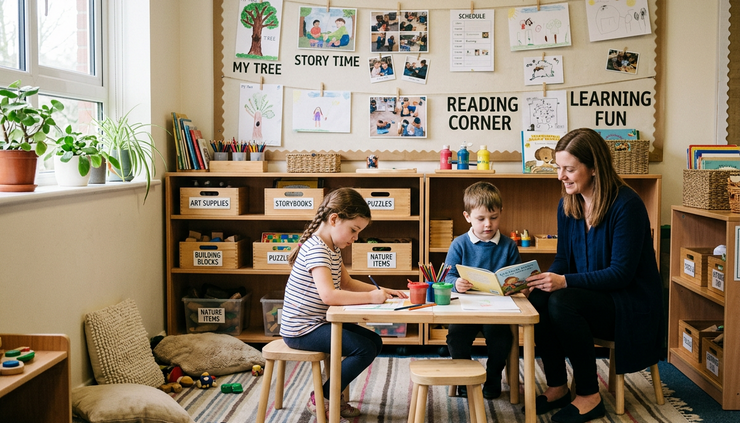
APD support is not about making learners fit a rigid system at any cost. It is about teaching skills, changing environments, and recognising different ways of processing sound. With thoughtful auditory training, the right tools, and a team that understands the child, listening can become less exhausting, and learning can become more accessible.
Our practice owner and senior audiologist, Chantal, has been highly trained by the internationally recognized Auditory Processing Institute (run by Dr Angela Alexander) and has been working in the field of auditory processing disorder for more than 5 years.
Tashira, our second audiologist, has been personally trained by Chantal on all the assessment and auditory training techniques. She has a wonderful and nurturing way with children and is highly passionate about her work in APD.